Song influencing scholarship
Dr. Langston Collin Wilkins reflects on ten tracks that led him to pursue the field of Ethnomusicology
My true introduction to the role, function and meaning of music was my 5th grade History Fair project on protest music. Crosby, Stills, Nash and Young “Ohio” was a central part of my submission and it’s a great example of music’s revolutionary potential. I was a Black youth from Third Ward Houston, Texas, seemingly removed from the song’s original context, but I couldn’t help but be touched by its message and spirit. It’s a truly courageous song that everyone should listen to and reflect on. Black Caesar is one of my favorite films of all time and James Brown’s “Down and Out in New York City is on the soundtrack. I’ve always marveled at how the songwriters, Brown and the JB’s were able to translate the film’s central themes (economic precarity, hope, street life, anxiety etc.) into a 4-minute track. This is a grossly under-appreciated hip hop protest song that helped shape both my musical taste and influenced my interest in the role, function and power of music. It’s a fearless song whose lyrics continue to cut deep nearly forty years later. I proudly recited one of Chuck D’s verse for an oratory assignment in 8th grade debate class. Tupac is the GOAT and my favorite artist (of any genre) ever, so there are countless tracks that I could’ve picked. “To Live and Die in LA” offers an immersive and intimate look into Black life in LA. Tupac express deep appreciation for and sensitivity towards community in the song and I’ve tried to take that same approach in both my research and public work. Thinking back on it, “To Live and Die in LA” was a key influence on my first book Welcome 2 Houston: Hip Hop Heritage in Hustletown. Underground hip hop at its finest. Cannibal Ox are Harlem wordsmiths who expertly use high level lyricism to paint intimate portraits of inner-city life. For me, “Iron Galaxy” is like 2pac’s “To Live and Die in LA,” but with more figurative language and covert meanings. My hometown rap group! They’re more known for 1991’s “Mind Playin’ Tricks,” but “The World is a Ghetto” initiated my love for hip hop and my interest in the ways the genre documents Black life and speaks truth to power. I’ve watched Nirvana’s Unplugged in New York (1994) too many times to count and “Where Did You Sleep Last Night” has always been my favorite track from the show. Nirvana’s performance is an interpretation of bluesman Leadbelly’s “In the Pines” (1944). Years later I learned that “In the Pines” is a traditional song that’s been recorded and reinterpreted over 150 times since the late 19th century. I love examining how various performers reinterpret songs and song concepts across time, space and social context. Salute to the sample! “Human Nature” has long been my favorite Michael Jackson song. A decade after its release, Teddy Riley sampled it on my SWV “Right Here,” one of my favorite songs of all time. “Human Nature” also forms the sonic foundation of Nas “It Ain’t Hard to Tell,” another song that I love. Sampling preserves musical and cultural memory, ensuring that these songs continue to impact our lives in perpetuity. This song dropped right as I was entering grad school and influenced by my master’s thesis, doctoral dissertation and first book. “Swang” uses Houston slab car culture as sort of a thematic frame through which they honor local Screw culture and the wider Black experience that gave birth to it. I research, write and teach about concepts of “home,” and no other song makes me think of home more than this one. The (Jazz) Crusaders were a jazz fusion band that originated in Houston, Texas, but eventually settled in Los Angeles. Musically, this performance elicits feelings of grounding, comfort and safety. Trombonist Wayne Henderson’s personal introductions of the bandmembers also adds to the air of intimacy and grounding.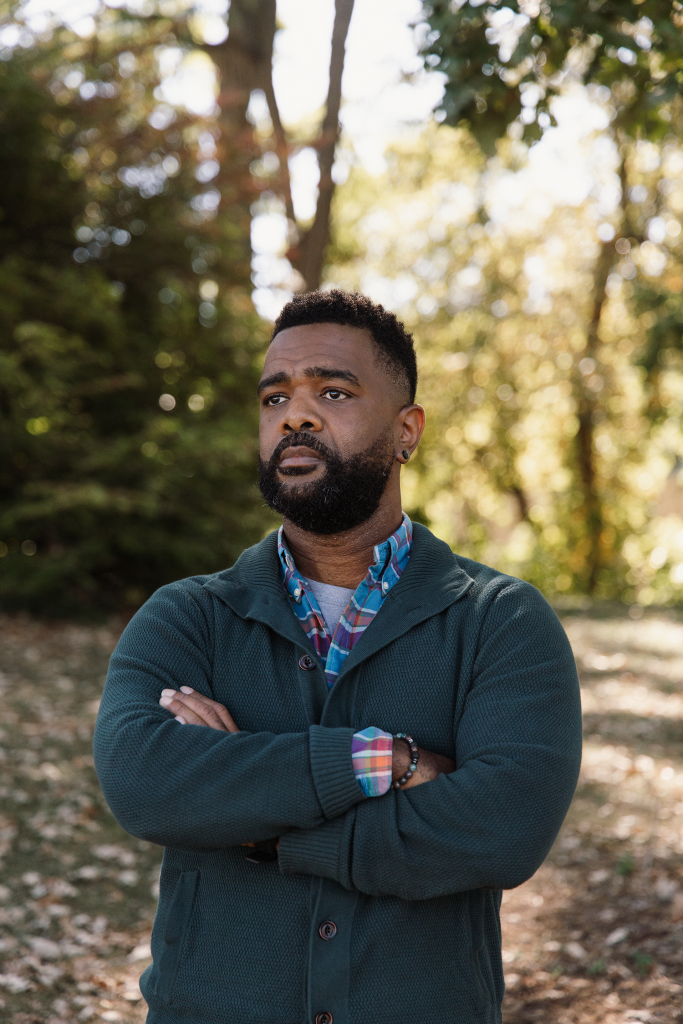 Dr. Langston Collin Wilkins is an Assistant Professor of Folklore and African American Studies at the University of Wisconsin–Madison. His research interests include African American folklife, African American music, urban folklore, car culture, and public folklore. Dr. Wilkins received his PhD from Indiana University’s Department of Folklore & Ethnomusicology in 2016. He also holds a MA in African American and African Diaspora Studies from Indiana University and a BA in English from the University of Texas at Austin.
Dr. Wilkins is the author of Welcome 2 Houston (University of Illinois Press, 2023), which explores the relationship between music creation, place attachment, and local heritage within Houston, Texas’ hip hop music scene. His work has also appeared in the Journal of Folklore Research, The Washington Post, Houston Chronicle, and several other publications. Prior to joining the UW faculty, Dr. Wilkins served as the State Folklorist for Washington State. Dr. Wilkins is currently an executive board member of the American Folklore Society.