On process and reticence
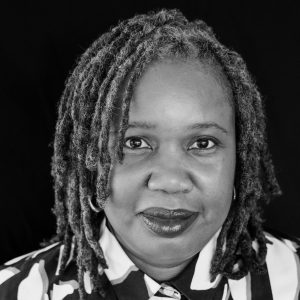 In her December 2024 Footsteps column, Dr. Ethelene Whitmire ruminates on 20th-century writer Nella Larsen, her semi-autobiographical character Helga Crane from the 1928 novel Quicksand, and time spent navigating Copenhagen. The New York Times’ Footsteps series traces landscapes that shaped major authors, and Whitmire had long imagined contributing to it after encountering Ellery Washington’s 2014 piece on James Baldwin in Paris. Her own engagement with Larsen dates back to her first research trip to Copenhagen in 2010.
Within Quicksand, Helga Crane struggles to find her place in the world, prompting questions about Larsen’s own sense of belonging as a mixed-race woman in the early 20th century. “Although Helga was a fictional character, she represented a lot of the feelings that African Americans had at the time,” Whitmire tells me. If Larsen writes Helga, and Whitmire writes Larsen, conversation with Whitmire becomes another panel in the ongoing act of witnessing: a triptych of attention.
By the mid-20th century, Whitmire notes that Larsen had largely disappeared from the literary record. It was Black women in PhD programs during the late 1970s who revived her work. “They wanted to know who the other women writers were who existed before them. Women started to recover these works and get them reprinted,” Whitmire explains. Even now, Quicksand remains the lesser-known work in comparison to Passing (1929), which is taught widely and was adapted for film in 2021. “I like doing recovery work,” Whitmire notes.
Trained as a social scientist and now a historian, writer, and curator, she sees her role in the Footsteps assignment as both a researcher and a guide. She begins with an untold or underreported story. “I am recreating and trying to tell Helga Crane and Nella Larsen’s story through my own wanderings in the 21st century,” she shares. “I’m asking what it is like now, 100 years after the Harlem Renaissance and publication of Quicksand, to move in these spaces while remembering and recovering both of their stories. My larger body of work explores African Americans in Denmark; Quicksand was one of the first iterations of this history to be documented.”
As Whitmire hypothesized Larsen’s routines, I turned to the question of her own writing rituals. “Because jazz was a big part of African American culture in Denmark, I would often listen to music to begin my writing process,” she notes. Whitmire wrote best in the mornings. She read contemporary reviews of Quicksand to understand how people reviewed the book when it came out. She examined Black newspapers for coverage of Larsen and photographed places Larsen would have known. Only then did she begin drafting.
When Whitmire discusses authorship, she is attentive to how Larsen’s life intersected with the city. “My research began with the novel,” she reflects. She reread Quicksand closely, marking every location mentioned, using the book as a map. A taste of smørrebrød, a visit to Selma’s, and time spent in local Danish cafés helped ground her in the city.
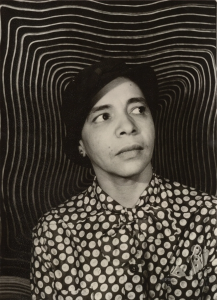
Most of the article was written in the United States, though Whitmire returned repeatedly to her memories and photographs, keeping Larsen’s books and biographies nearby. She thought visually about the city’s spatial logic and how Larsen might have walked from one place to another, what she would have passed, and what would have caught her eye. “She liked luxury,” she shares. Whitmire estimates that she has traveled to Denmark nearly twenty times; this fieldwork displays her ease in writing about the place.
Whitmire’s Footsteps column reveals as much about her own approach to writing as it does about Larsen’s. Her process moves between archival study, fieldwork, sensory detail, and reflection. The column becomes a record not just of Larsen’s presence in Copenhagen, but of Whitmire’s method and how she assembles history on the page, through careful observation, a century later.